Part 1: Who You Are as a Mentor
Most experienced teachers don’t step into mentoring because they lack skill or expertise. They step in because someone else sees something in them first—a steady presence, sound judgment, a calm confidence earned over time.
That confidence doesn’t come from getting everything right. It comes from years of teaching, experimenting, missing the mark, reflecting, and trying again. It’s shaped through lived experience and the quiet wisdom that develops when you’ve seen enough classrooms, students, and school years to know that teaching is rarely simple—and never static.
And yet, one of the most common missteps in mentoring has very little to do with strategy or technique. It has everything to do with who we are being in the relationship.
In The Mentor’s Guidebook, we argue that effective mentorship doesn’t begin with tools, templates, or protocols. It begins with identity. Long before schedules are set, observations are planned, or feedback is given, mentors are making decisions—often unconsciously—about posture, tone, and presence.
Before we focus on what mentors do, there is a more foundational question each of us must be willing to sit with:
Who are you as a mentor?
Why the “Who” Matters More Than We Think
Think back to your own early years in teaching. Chances are, you can still name the people who shaped you most—not because they always had the right answer, but because of how they made you feel as a professional. They listened first. They noticed what mattered. They understood when to lean in and when to give you space.
New teachers are extraordinarily perceptive. Long before they take in your advice, they are reading your tone, your body language, your patience, and your intent. They are paying attention to how you show up. Mentorship is never neutral. It is always doing something. It either builds confidence or quietly erodes it. It either creates space for growth or nudges people toward compliance and self-doubt.
That’s why mentoring isn’t just a role we step into—it’s a stance we take.
The ABCDs of Mentorship
To help mentors slow down and reflect on that stance, we use a simple framework: the ABCDs of mentorship—Attitudes, Biases, Conceptual Understanding, and Dispositions. These aren’t abstract ideas. They show up in every hallway conversation, every check-in, and every silence.
Attitudes are about how you feel coming into the work. Do you see mentoring as one more thing on an already full plate—or as a chance to give something back to the profession that shaped you?
Biases are trickier—and more powerful. We all have them. We may connect more easily with teachers who remind us of ourselves. Left unexamined, bias doesn’t expand possibility—it narrows it.
Conceptual understanding is about how you think mentoring actually works. Is it mainly about giving advice? Or is it about helping someone develop judgment, confidence, and professional identity over time?
Dispositions are your patterns—the way you consistently show up. Are you primarily a listener? A challenger? A steady source of reassurance? Dispositions shape trust, and trust is the currency of mentoring.
None of this is about being perfect. It’s about being intentional.
Mentor… or Tormentor?
Every mentor means well. But impact isn’t measured by intent. Early career teachers are especially vulnerable to what we call tormentor moments—times when feedback overwhelms, advice silences, or comparison discourages.
The difference between a mentor and a tormentor isn’t expertise. It’s self-awareness.
A PAUSE FOR REFLECTION
- What attitudes am I bringing into this interaction today?
- What assumptions might I be making about this teacher’s confidence or capacity?
- Am I more focused on being helpful—or on being right?
- How do I want this teacher to feel when we’re done talking?
Why This Matters Now
Mentorship doesn’t just shape individual teachers—it shapes the profession. At a time when retention, belonging, and professional identity are under real strain, mentors play a decisive role in whether new teachers merely survive or genuinely thrive.
That work doesn’t begin with advice. It begins with awareness.
In the next post, we’ll explore your mentorship modality—and why it matters more than most of us realize.
NOTE
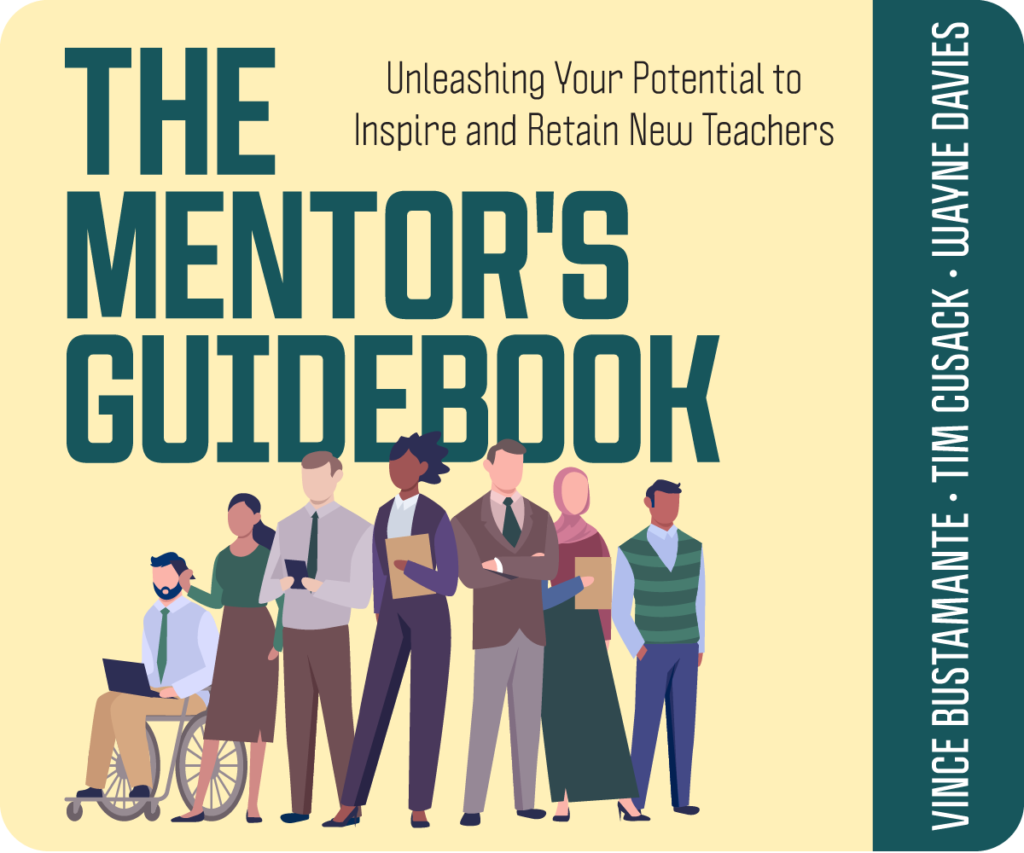
This series draws on ideas from The Mentor’s Guidebook: Unleashing Your Potential to Inspire and Retain New Teachers (Corwin, 2025).
Written for teachers who mentor teachers, the book invites experienced educators to reflect on their identity, approach, and impact as mentors — and to see mentorship as essential work for sustaining the profession.